I am going through a re-read of the Malazan Book of The Fallen series these days, after 9 years since the last (and first) round. Mr. Erikson is a master wordsmith of course, with a veritable vocabulary. So naturally, this re-read brings up many words I’ve forgotten over the years.
But “draconian” I remember. Setting aside its common use for harsh laws, I’ve intuitively associated the term with dragons for reasons I can’t remember. That’s why the following passage felt intuitively correct:
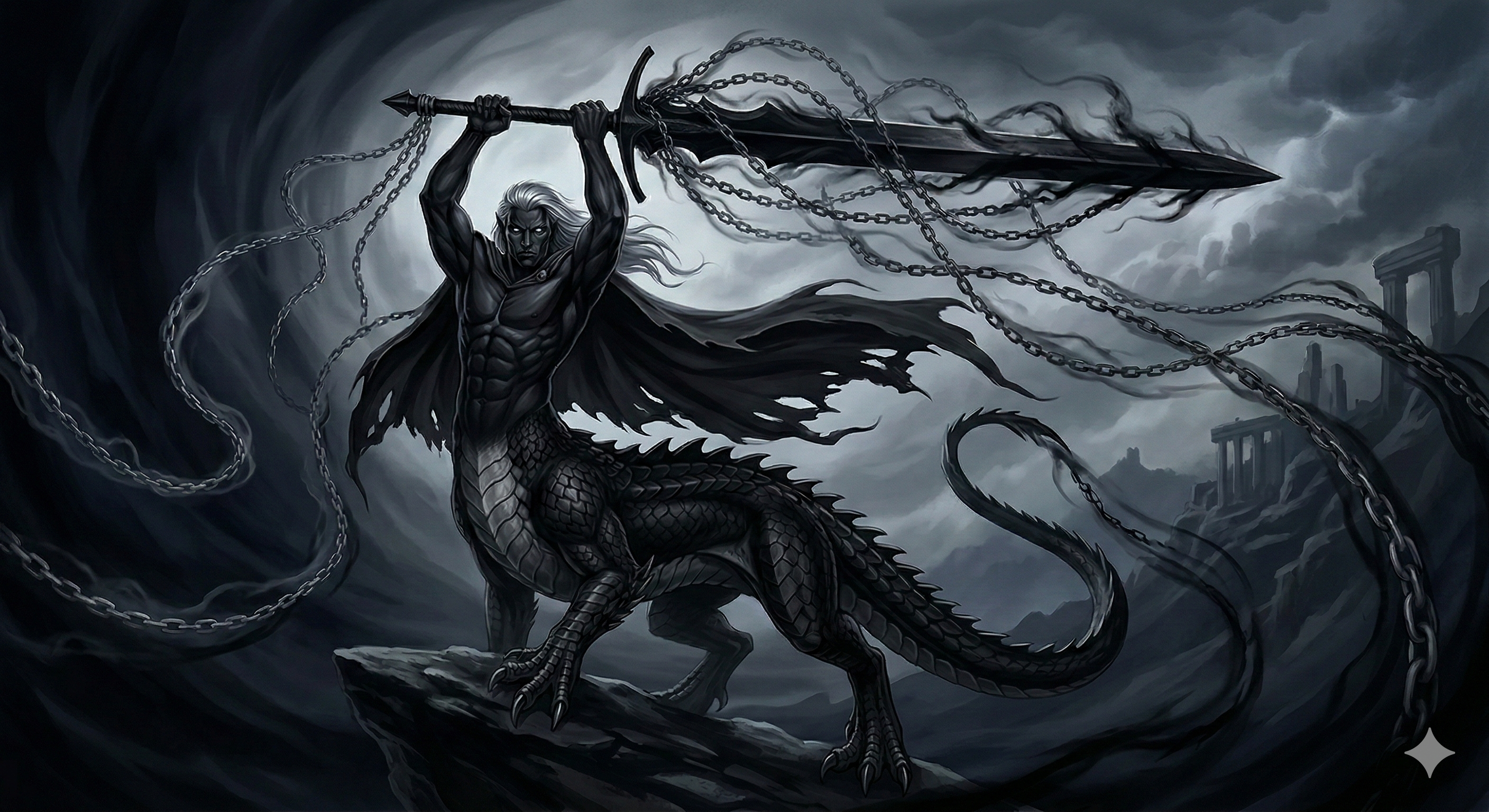
From the hips up he was human, heavily muscled, holding aloft a black two-handed sword that trailed smoky, ethereal chains drifting off into the background’s empty darkness. His lower body was draconian, its armoured scales black, paling to grey at the belly.
~ Tattersail, in Gardens of The Moon by Steven Erikson.
Just in case you’re wondering, this passage is talking about a tarot card’s image of Anomander Rake, the Lord of Moonspawn. He could transform into a dragon. Back to intuitive meanings.
I wanted to double-check, though. My memory isn’t as sharp as it was in the pre-social media era. And the dictionary didn’t say anything about dragons. What now, intuitive man?
Ask an LLM, of course (it’s 2026!). And ask I did: Does draconian mean “dragon-like” in certain contexts? ChatGPT said the short answer is no, but went on to say I might encounter that particular use in “fantasy contexts, especially influenced by Latin or Greek roots”. ChatGPT, you had me in the first half!
The LLM response taught me the word “draco” is Latin for dragon. It also mentioned the source of the “harsh laws” meaning – an Athenian (Greek) lawmaker named Draco, who prescribed the death sentence even for trivial crimes sometimes. (On a side note, I guess the Malfoys certainly had a way with their words.) Anyway, my next question was whether any popular dictionary mentions this uncommon use of draconian. The LLM said no. I found the same when I checked myself.
But the LLM response also brought up a 1998 newspaper article with an interesting distinction: it says the lower-case draconian means dragon-like, coming from the Latin and Greek terms for a dragon or snake. Mr. William Hartston, the author of that article, then says the upper-case Draconian refers to the Athenian lawmaker. This separation has clearly been lost with time, and people just use the lower-case version to refer to severe laws now.
Interestingly enough, the word “draconic”, the earlier form of “draconian”, still maintains both Draco’s severity and dragon-like meanings. I learnt this from another reference brought up by ChatGPT, in a grammar and etymology discussion site called Grammarphobia. A 2009 post there discusses these very same terms, and even makes the same connection to our favourite Malfoy.
Basically, this rabbit hole went just like many of my research ideas – someone else has thought of it decades ago. Oh well, that’s fine, it was still fun! More importantly, someone checking the popular dictionaries would have been rather confused by the description of Anomander Rake. None of them show the connection between draconian and dragons. So, a less experienced reader could think Erikson was mistaken, shrug, and move on. That was me 9 years ago, probably.